Home » Archives for Admin » Page 19
-
Posted on February 17, 2022
-
/Under Strategy
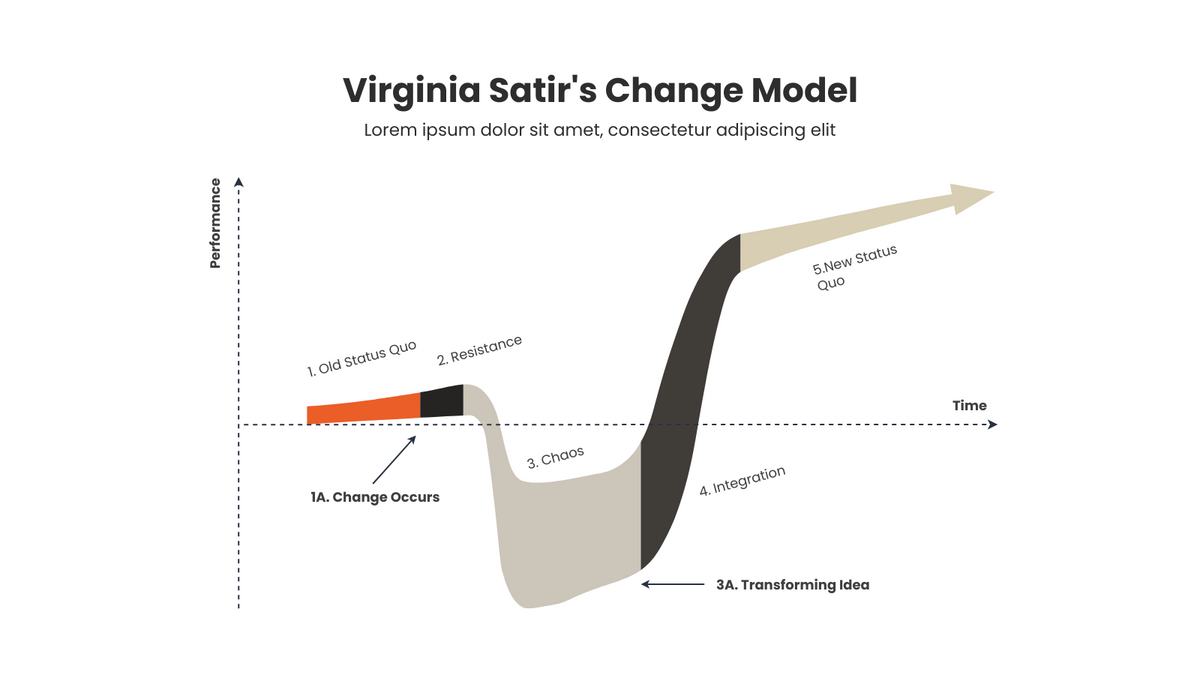
Virginia Satir has developed a model that shows how people experience and respond to change. Its purpose is to help project team members understand how they feel so that they can implement change more effectively. The Virginia Satir Change Model is a five-stage model of change. It describes the impact of each stage on people's emotions, thoughts, performance, physiology, and more. Using the principles embodied in the model, you can improve your ability to understand how to deal with change and how to help others deal with it.
-
Posted on February 17, 2022
-
/Under Strategy
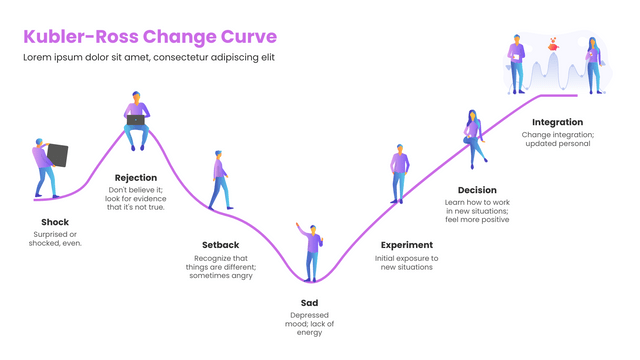
Kubler-Ross proposes that a terminally ill patient goes through five stages of grief after learning of his or her condition. She further proposed that this model could be applied to any dramatic life change situation.
The first five stages of shock & denial, anger, bargaining, depression and acceptance - have been adjusted over the years. There are many versions of the curve that exist. Most of them, however, are consistent in their use of the following basic emotions, which are often grouped into three distinct transitional stages.
-
Posted on February 16, 2022
-
/Under Strategy
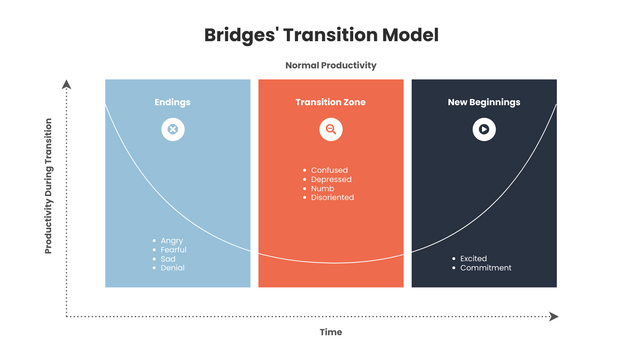
The Bridge Transition Model, which focuses on transition rather than change. The idea of focusing on transition rather than change is not only a matter of wording, but it also devises an entirely different approach to change management. Only when leaders and organizations solve the transformation problems encountered by people in the process of change can change succeed. If the change is to be carried out as planned, the key is to support people to realize the transformation, rather than forcibly complete the transformation. This is the key to taking advantage of innovation opportunities and creating organizational flexibility.
-
Posted on February 16, 2022
-
/Under Business
Customer journey mapping is a very useful technique to help you understand your customers' motivations - their needs, indecisiveness and concerns. While most organizations are quite good at collecting customer data, data alone cannot convey the frustrations and experiences of customers. One of the best storytelling tools in business is the customer journey map (CJM).
-
Posted on February 16, 2022
-
/Under Business
What is Email Marketing? EDM marketing (Electronic Direct Mail) is also called: Email marketing, e-mail marketing. It is a marketing tool used to promote sales by sending EDM emails to target customers, establishing communication channels with them, and conveying relevant information directly to them. Edit this Email marketing illustration Email marketing has three basic elements: user permission, email message, and the value of the message to the user. If one of these three elements is missing, it cannot be called effective email marketing. Email marketing is a direct sales method that uses email…
continue reading →
-
Posted on February 15, 2022
-
/Under Strategy
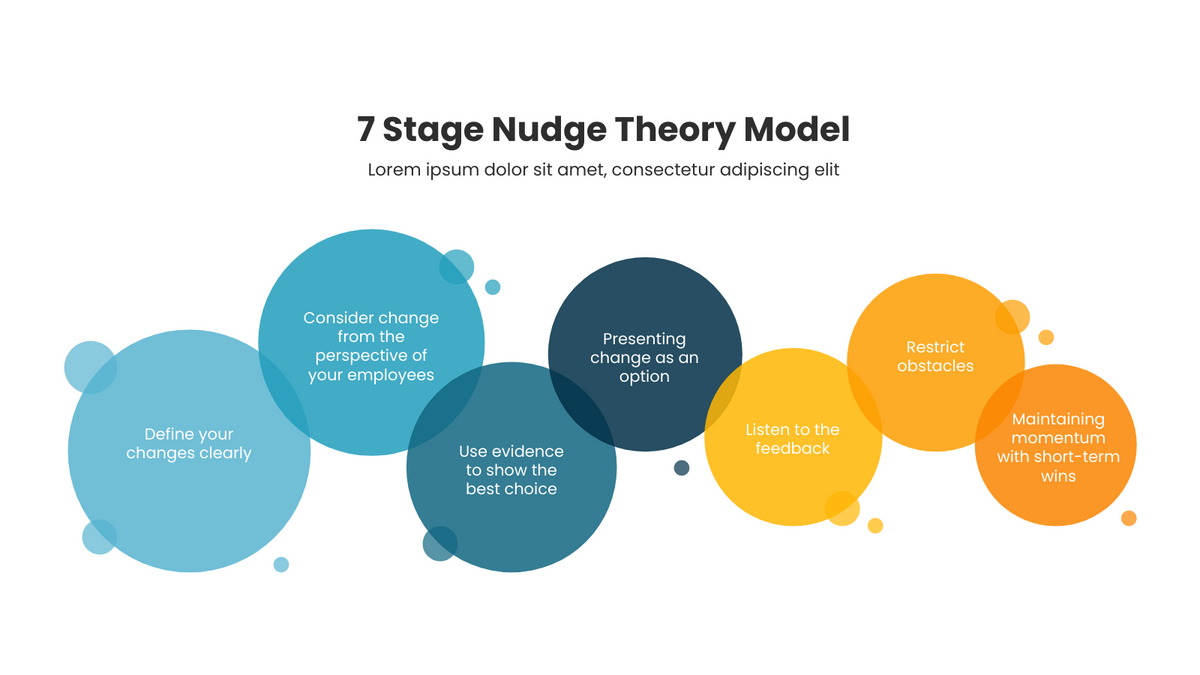
What is Nudge theory? Sometimes we think we want others to make decisions the way we want them to and tell them directly, but this often backfires, even when we have real power over others, such as teachers, parents, bosses, etc. If you have to advise someone who might say no to your decision, using indirect advice has been shown to produce better results. Edit this Illustration The Nudge theory first emerged in the United States in the early 21st century as a radical way to influence how people interact with the financial…
continue reading →
-
Posted on February 11, 2022
-
/Under Strategy
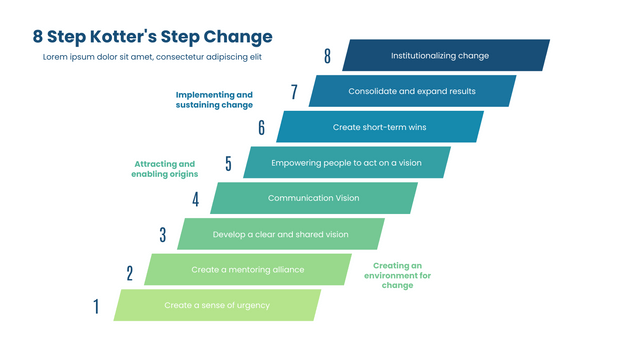
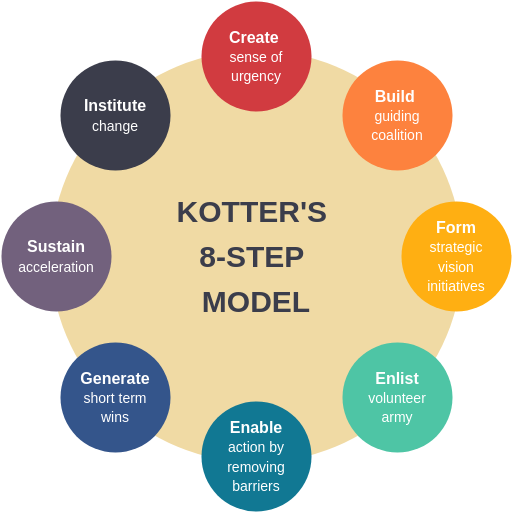
John Kotter, a professor at Harvard Business School, has studied many companies that have successfully implemented change in their organizations. This led him to develop a common eight-step model that other organizations can follow to make change. He describes his eight-step change process in his book, Leading Change. Although described as a model for change management and change leadership, it is worth noting that Kotter's eight steps are closely related to improvement planning. The human tendency toward routine means that change is a conscious desire to improve things or the need to adapt to changing circumstances.
-
Posted on February 11, 2022
-
/Under Strategy
The 8 steps in the process of change include: creating a sense of urgency, forming powerful guiding coalitions, developing a vision and a strategy, communicating the vision, removing obstacles and empowering employees for action, creating short-term wins, consolidating gains and strengthening change by anchoring change in the culture. Kotter’s 8 step model can be explained with the help of the illustration given below:
-
Posted on February 11, 2022
-
/Under Strategy
The 7-S model states that all aspects of a company must be considered holistically in the development process. It includes structure, systems, style, staff, skills, strategy and shared values. In other words, it is not enough for a company to have a clear strategy and a well-thought-out action plan, because companies can also make mistakes in the process of implementing their strategies. This is because strategy is only one factor.
-
Posted on February 11, 2022
-
/Under Strategy
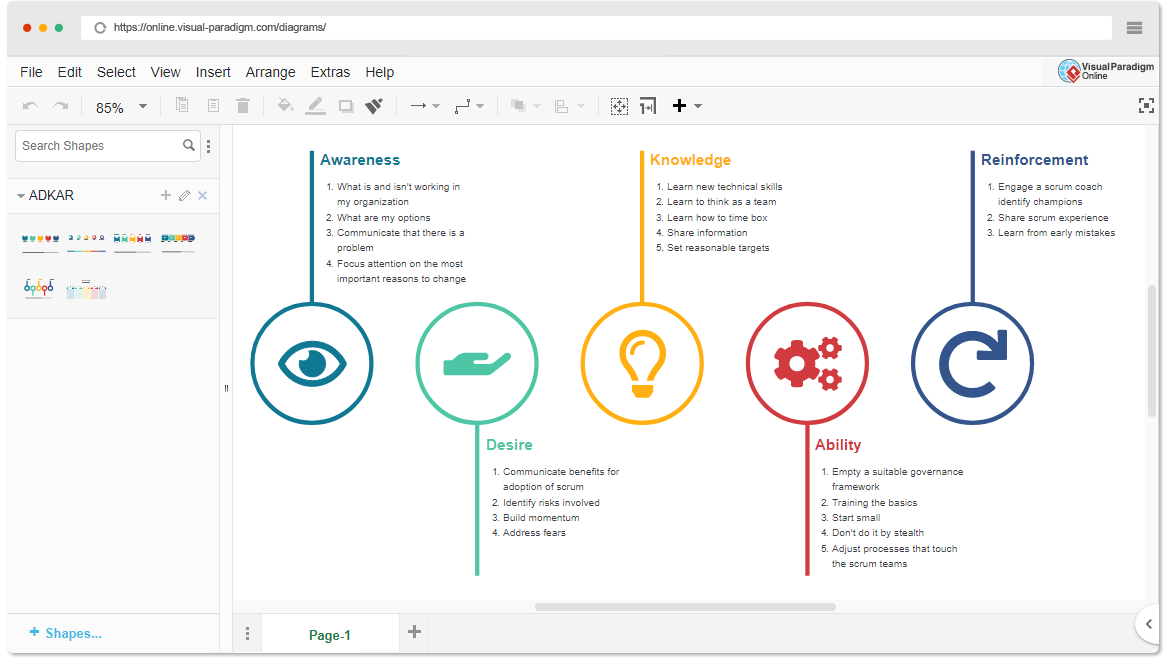
Change is often a complex and difficult process, and more importantly, it is inevitable. Managing change at the individual and organizational levels requires new ideas, new models of change, and new frameworks and tools to successfully achieve the desired change. ADKAR can be applied to all forms of change to drive successful change programs. The ADKAR Transformation Model, created by Prosci founder Jeff Hiatt, consists of five initials that represent the five stages of change an individual must reach to succeed. Awareness, Desire, Knowledge, Ability and Reinforcement.