Home » Archives for Admin » Page 2
-
Posted on November 20, 2024
-
/Under UML
Introduction A use case diagram is a graphical representation of the interactions between users (actors) and a system. It helps to identify the system's functional requirements by illustrating the different ways users can interact with the system to achieve specific goals. This tutorial will guide you through the basics of creating and understanding use case diagrams, using the Wheels bike hire system examples on object-oriented development. What is a Use Case Diagram? A use case diagram is a type of behavioral diagram defined by the Unified Modeling Language (UML). It consists of use…
continue reading →
-
Posted on November 20, 2024
-
/Under UML
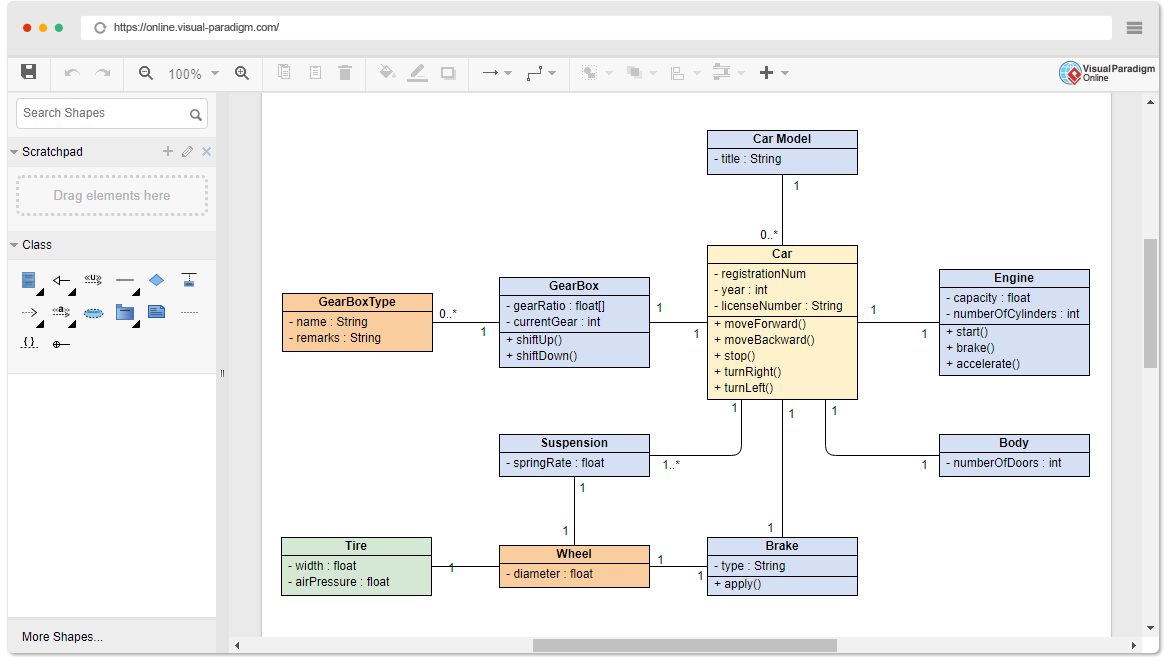
What is a Class Diagram? A class diagram is a static structure diagram in UML (Unified Modeling Language) that shows the system's classes, their attributes, methods (operations), and the relationships between objects. It is used to model the static view of an application. Why Use a Class Diagram? Visual Representation: Provides a clear visual representation of the system's structure. Communication: Helps in communicating the design of the system to stakeholders. Blueprint: Acts as a blueprint for the system's implementation. Documentation: Serves as documentation for the system's design. When to Use a Class Diagram? Design Phase: During the design…
continue reading →
-
Posted on August 22, 2024
-
/Under UML
In the dynamic world of software development, having a powerful and user-friendly UML modeling tool is crucial for designing, communicating, and documenting complex systems. Among the leading options in the market, Visual Paradigm stands out as a comprehensive and versatile solution that caters to the needs of professionals, students, and hobbyists alike. Visual Paradigm is a robust UML modeling tool that offers a wide range of features to support the entire software development lifecycle. From creating UML diagrams to reverse engineering code, the tool provides a seamless and intuitive user experience. One of the standout features of Visual…
continue reading →
-
Posted on August 22, 2024
-
/Under UML
UML (Unified Modeling Language) is a standard language for describing the design of software systems. As UML describes real-time systems, it is important to create a conceptual model and gradually build upon it. The conceptual model of UML can be mastered by learning the following three major elements: UML Building Blocks Rules to connect the building blocks Common mechanisms of UML UML Building Blocks The building blocks of UML can be defined as: Things Relationships Diagrams Things Things are the most important building blocks of UML. They can be further classified into: Structural…
continue reading →
-
Posted on August 22, 2024
-
/Under UML
Introduction Automated Teller Machines (ATMs) have become an integral part of modern banking and financial services. As the demand for convenient and accessible banking solutions continues to grow, the need for robust and efficient ATM systems has become more critical than ever. In this case study, we will explore the visual modeling of an ATM system using the Unified Modeling Language (UML) and the Visual Paradigm for UML tool. Use Case Diagram The first step in modeling the ATM system is to identify the key actors and their interactions with the system. The…
continue reading →
🌟 Introducing Smart Board by Visual Paradigm 🌟 Experience the future of mind mapping with our cutting-edge, user-friendly, and entirely FREE tool designed to simplify complexity and supercharge your thinking process. Smart Board empowers users to unlock their creativity and tackle even the most intricate challenges with ease. 💥 Why Choose Smart Board? 💥 🎨 Visual Representation: Present key ideas, concepts, and relationships in an organized and engaging format. Quickly grasp the big picture and dive into specific details as needed. 🌳 Hierarchical Structure: Break down complex topics or projects into smaller, manageable…
continue reading →
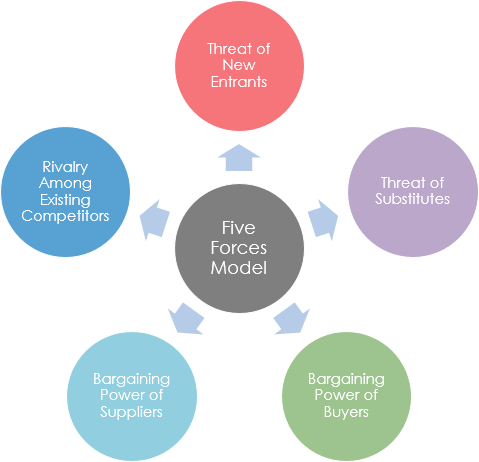
The Porter's Five Forces analysis model, developed by renowned Harvard Business School professor Michael E. Porter, has been a cornerstone of strategic management since its publication in the Harvard Business Review in 1979. This influential framework has transformed the way enterprises, organizations, and even entire countries approach strategy formulation. At its core, the Five Forces analysis provides a global overview of the competitive landscape, helping companies assess industry attractiveness, predict industry trends, and determine the best industries to compete in. By understanding the five key forces that shape competition, businesses can position themselves…
continue reading →
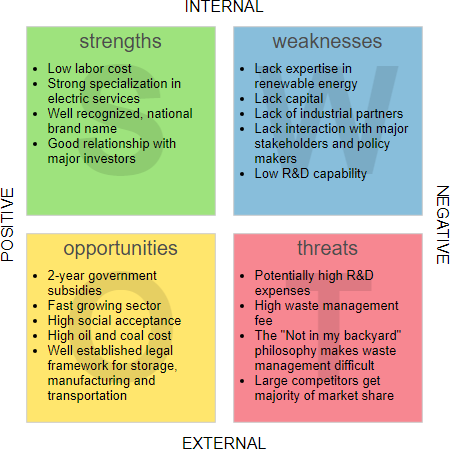
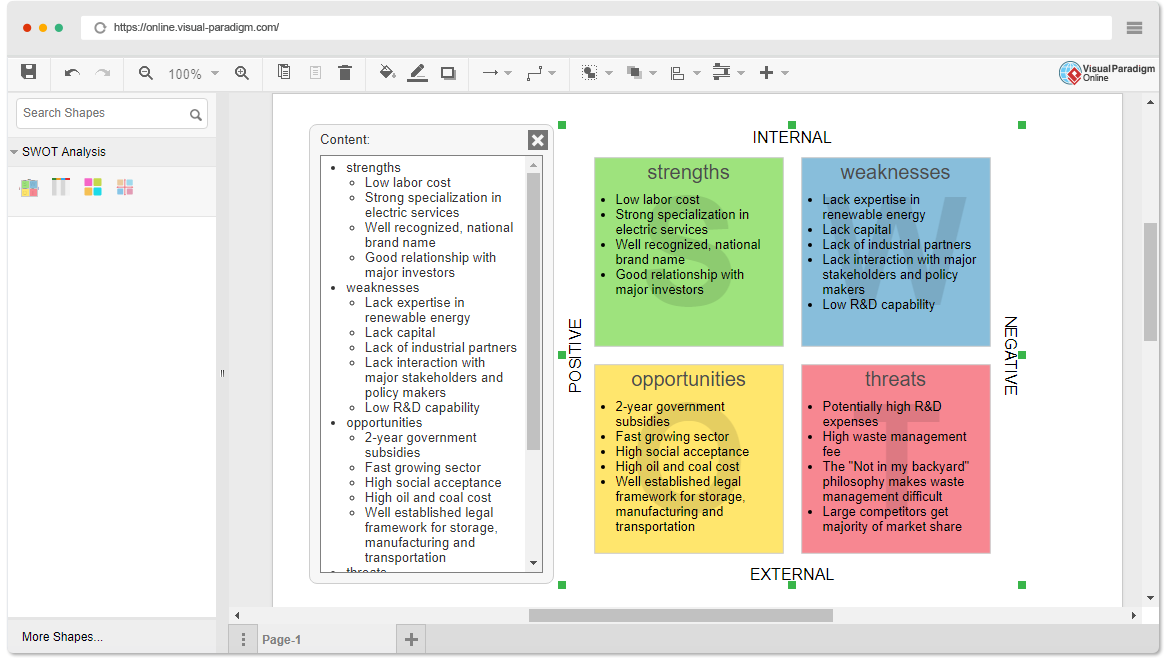
Introduction In this case study, we will explore a SWOT (Strengths, Weaknesses, Opportunities, Threats) analysis for a waste management company. The SWOT analysis is a strategic planning tool used to identify the internal and external factors that can impact an organization’s performance. The image provided offers a clear visual representation of these factors. SWOT Analysis Breakdown Strengths: Low labor cost: The company benefits from lower operational costs due to affordable labor. Strong specialization in electrical services: Expertise in electrical services sets the company apart from competitors. Well-recognized national brand name: A strong brand presence enhances customer…
continue reading →
Introduction In the dynamic and competitive energy sector, a thorough understanding of the internal and external environment is crucial for strategic decision-making. SWOT analysis, an acronym for Strengths, Weaknesses, Opportunities, and Threats, is a powerful tool that helps businesses identify these factors, thereby enabling them to capitalize on their strengths, mitigate weaknesses, exploit opportunities, and manage threats. This article presents a comprehensive SWOT analysis for ABC Company's, a prominent player in the energy sector, based on the provided SWOT matrix. Strengths: Green Light for Growth Strong Brand Recognition ABC Company enjoys a well-established…
continue reading →
-
Posted on July 31, 2024
-
/Under Agile
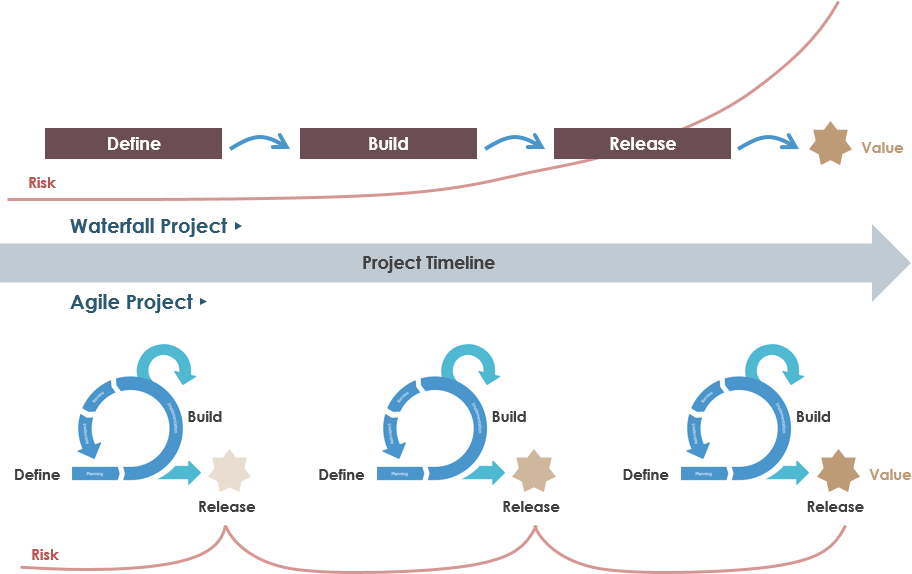
The Unified Modeling Language (UML) has long been a fundamental tool in the software development arsenal, providing a standardized visual language for modeling the structure and behavior of complex systems. As the software industry has shifted towards more iterative, flexible Agile methodologies, there have been questions about the ongoing relevance of UML. However, a closer examination reveals that UML remains a valuable asset, particularly when leveraged appropriately within an Agile context. The Core Value of UML At its core, UML provides a common vocabulary and set of diagramming techniques that allow software teams…
continue reading →