Cấu trúc Hành vi Hệ thống: Hướng dẫn Thực tiễn về Các Mối quan hệ Trường hợp Sử dụng UML

Cấu trúc Hành vi Hệ thống: Hướng dẫn Thực tiễn về Các Mối quan hệ Trường hợp Sử dụng UML

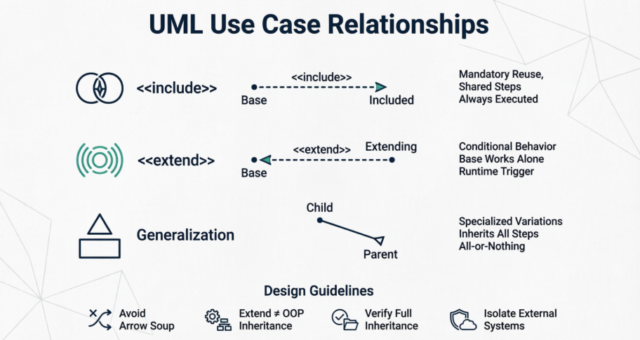
Giới thiệu Trong kỹ thuật phần mềm hiện đại, các sơ đồ trường hợp sử dụng thường bị hiểu nhầm là chỉ danh sách tính năng đơn thuần hoặc bản đồ hành trình dự án cấp cao. Trên thực tế, chúng đóng vai trò như khung xương kiến trúc. Khi được áp dụng đúng cách, các mối quan hệ trường hợp sử dụng không chỉ liệt kê những gì hệ thống cần làm; chúng tích cực phân tách các hành vi phức tạp thành các mô-đun dễ quản lý, tái sử dụng được và…continue reading →

Thiết kế Hệ thống với UML: Một nghiên cứu trường hợp toàn diện trong Kỹ thuật hiện đại

Giới thiệu Trong kỹ thuật phần mềm hiện đại, khoảng cách giữa các yêu cầu kinh doanh trừu tượng và mã nguồn có thể triển khai, mở rộng được thường được lấp đầy bởi một ký hiệu chuẩn duy nhất: Ngôn ngữ Mô hình hóa Đơn nhất (UML). Khi các hệ thống ngày càng phức tạp, kiến trúc phân tán và phụ thuộc chéo giữa các chức năng, việc dựa vào các bản phác thảo không chính thức hay các kho mã nguồn tách biệt sẽ tạo ra rủi ro không thể chấp…continue reading →
Kiến trúc với sự rõ ràng: Một nghiên cứu điển hình toàn diện về các khối xây dựng UML

Kiến trúc với sự rõ ràng: Một nghiên cứu điển hình toàn diện về các khối xây dựng UML

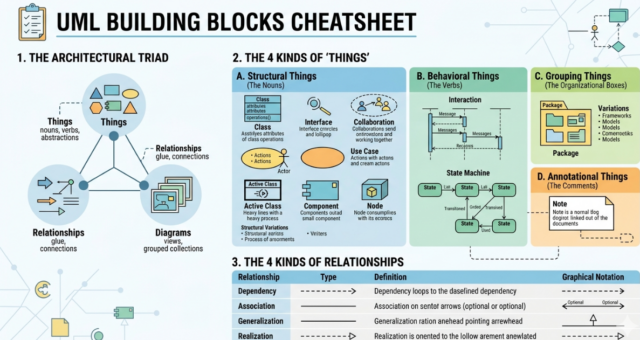
Giới thiệu Các hệ thống phần mềm hiện đại vốn dĩ phức tạp, bao gồm hàng trăm thành phần tương tác, các tiến trình đồng thời và luồng dữ liệu tinh vi. Việc cầu nối khoảng cách giữa các yêu cầu kinh doanh trừu tượng và việc triển khai kỹ thuật cụ thể đòi hỏi một phương tiện giao tiếp chuẩn hóa, rõ ràng. Ngôn ngữ mô hình hóa thống nhất (UML) đóng vai trò như bản vẽ tổng thể phổ quát, cung cấp một từ vựng trực quan mà các nhà phát…continue reading →
Gói Là Gì? Sơ Đồ Gói Trong UML Là Gì?

Gói Là Gì? Sơ Đồ Gói Trong UML Là Gì?

Packages in the Unified Modeling Language are used to group elements and provide namespaces for the grouped elements. A package can contain other packages, thus providing a hierarchical organization of packages. Almost all UML elements can be grouped into packages. Thus, classes, objects, use cases, components, nodes, node instances, etc. can be organized into packages, thus making the organization of the myriad elements contained in a real-world UML model manageable.
Mọi Thứ Bạn Cần Biết Về Sơ Đồ Tuần Tự

Mọi Thứ Bạn Cần Biết Về Sơ Đồ Tuần Tự

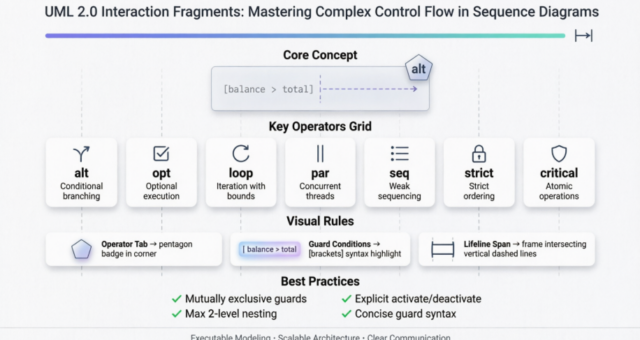
UML Sequence Diagrams are interaction diagrams that detail how operations are carried out. They capture the interaction between objects in the context of a collaboration. Sequence Diagrams are time focus and they show the order of the interaction visually by using the vertical axis of the diagram to represent time what messages are sent and when.
Bốn Loại Mối Quan Hệ Trong Sơ Đồ Ca Sử Dụng

Bốn Loại Mối Quan Hệ Trong Sơ Đồ Ca Sử Dụng

In UML, relationships are connections between model elements. Use cases are also connected to each other in different kinds of relationships. The relationship between two use cases basically models the dependencies between two use cases. By reusing existing use cases using different types of relationships, the overall effort required to develop the system is reduced. Use case diagrams show use cases, actors, and the relationships between them. For example, the relationship between an actor and a use case illustrates that the actor can use a certain functionality of the business system.
Các Trường Hợp Sử Dụng “Bao Gồm” Và “Mở Rộng”

Các Trường Hợp Sử Dụng “Bao Gồm” Và “Mở Rộng”

Use case relationships model the dependencies between use cases in the interaction model of the system. Although, independent use cases can adequately represent simpler systems. However, in order to represent complex or large systems, we may need to construct complex use cases with the help of dependencies between use cases. Establishing relationships between use cases allows reuse of those use cases that need to be defined over and over again, which reduces developer effort.
Tính Đa Dạng Là Gì

Tính Đa Dạng Là Gì

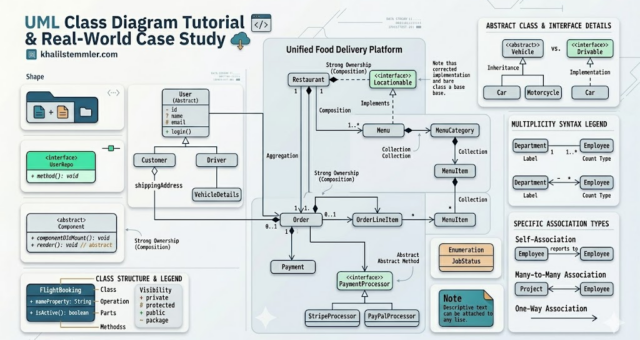
Multiplicity in class diagram should be indicated at each end of the association. This specifies the minimum and maximum number of instances that can be linked. For example, a car has 3 or 4 wheels, but each wheel belongs to exactly one car. Place multiplicity notations near the ends of an association. These symbols indicate the number of instances of one class linked to one instance of the other class.
Diagrama De Estado: Un Tutorial Rápido

Diagrama De Estado: Un Tutorial Rápido

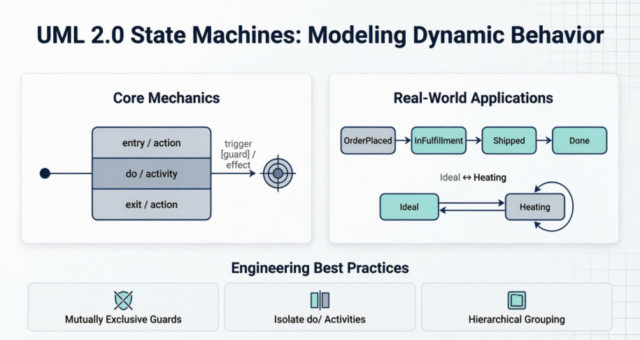
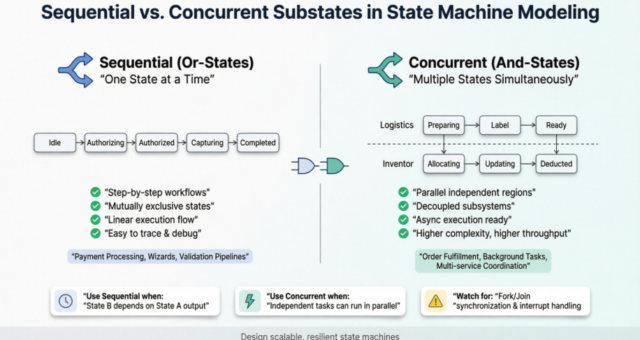
¿Qué es un diagrama de estado UML? Un diagrama de estado (llamado en la especificación UML 1.x ) es un diagrama que muestra una máquina de estado y se denomina diagrama de máquina de estado en UML 2.x. La llamada máquina de estado es un comportamiento que describe los diversos estados y transiciones de estado de un objeto en su ciclo de vida. Un diagrama de estado es uno de los 14 diagramas UML que se utilizan para modelar en UML 2.0.   Define los diferentes estados de un objeto durante su ciclo de vida, que cambian en respuesta a los eventos. Los…continue reading →