Home » Archives for Admin » Page 20
-
Posted on February 11, 2022
-
/Under Strategy
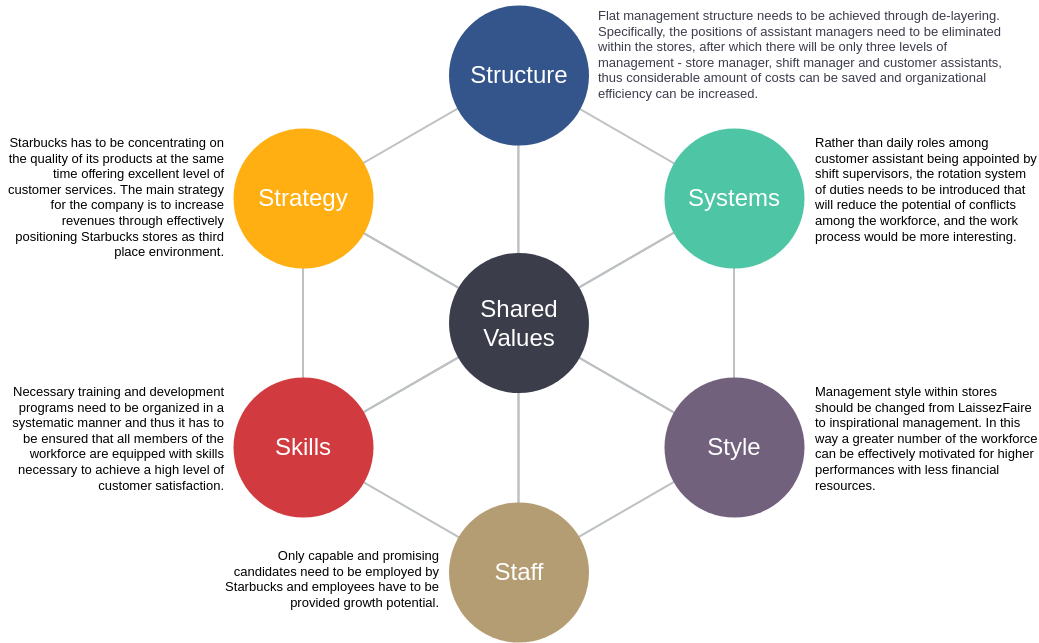
The McKinsey 7S Model ( also known as 7S Model for short) is the seven elements of a business organization designed by the McKinsey & Company Research Center, which states that companies must consider all aspects of the development process in a comprehensive manner, including structure, systems, style, staff, skills, strategy, and shared values - the seven skills, strategies, and shared values.
-
Posted on February 11, 2022
-
/Under Strategy
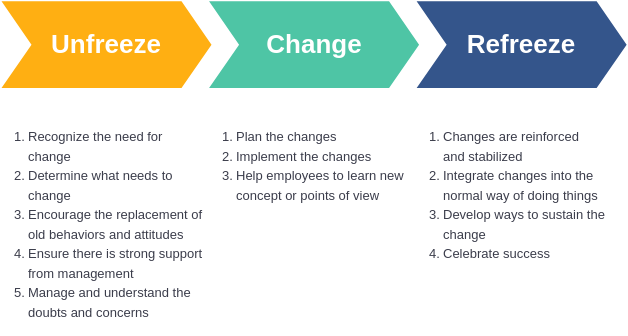
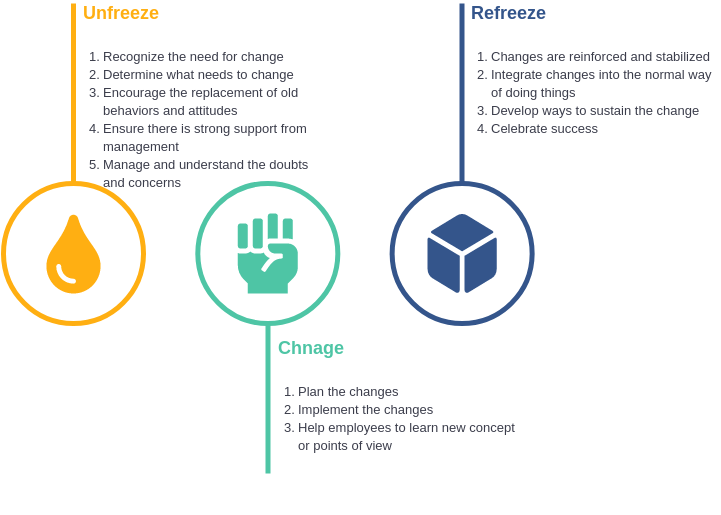
Many models have been developed to explain organizational change. One of the earliest models was developed by Kurt Lewin, a German psychologist and researcher on communication and organizational development. Lewin's three-step approach views change as a break in organizational equilibrium, or a thaw. Once the thaw is complete, the change itself can be introduced, but simply introducing the change does not ensure that the change will last; the new state needs to be refrozen. The new state needs to be refrozen so that it can be maintained for a significant period of time. Thus, the purpose of refreezing is to stabilize the new state by balancing the two forces of driving and binding forces.
-
Posted on February 11, 2022
-
/Under IT
UML Sequence Diagrams are interaction diagrams that detail how operations are carried out. They capture the interaction between objects in the context of a collaboration. Sequence Diagrams are time focus and they show the order of the interaction visually by using the vertical axis of the diagram to represent time what messages are sent and when.
-
Posted on February 10, 2022
-
/Under Strategy
Lewin's Change Management Model is a comprehensive change model designed to understand why change happens and what must be done to effect change in the most seamless way. Lewin developed the change model as a way to illustrate how people react when faced with change in their lives. Lewin's change management model can be applied in a wide range of contexts. For example, it can help you understand why some people and organizations are motivated more by the need for social recognition than by financial incentives, and it teaches you how to engage employees in important organizational change.
-
Posted on February 10, 2022
-
/Under IT
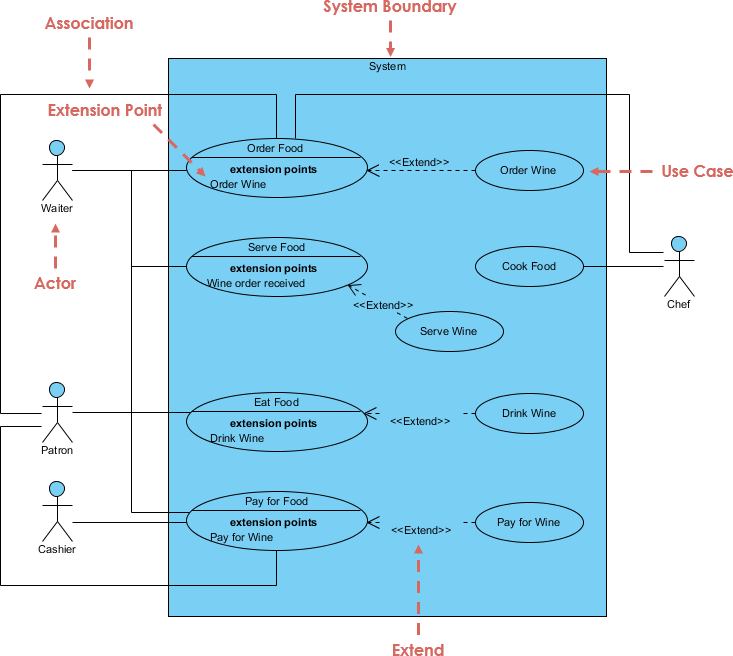
In UML, relationships are connections between model elements. Use cases are also connected to each other in different kinds of relationships. The relationship between two use cases basically models the dependencies between two use cases. By reusing existing use cases using different types of relationships, the overall effort required to develop the system is reduced. Use case diagrams show use cases, actors, and the relationships between them. For example, the relationship between an actor and a use case illustrates that the actor can use a certain functionality of the business system.
-
Posted on February 9, 2022
-
/Under IT
Use case relationships model the dependencies between use cases in the interaction model of the system. Although, independent use cases can adequately represent simpler systems. However, in order to represent complex or large systems, we may need to construct complex use cases with the help of dependencies between use cases. Establishing relationships between use cases allows reuse of those use cases that need to be defined over and over again, which reduces developer effort.
-
Posted on February 9, 2022
-
/Under IT
Packages in the Unified Modeling Language are used to group elements and provide namespaces for the grouped elements. A package can contain other packages, thus providing a hierarchical organization of packages. Almost all UML elements can be grouped into packages. Thus, classes, objects, use cases, components, nodes, node instances, etc. can be organized into packages, thus making the organization of the myriad elements contained in a real-world UML model manageable.
-
Posted on February 9, 2022
-
/Under IT
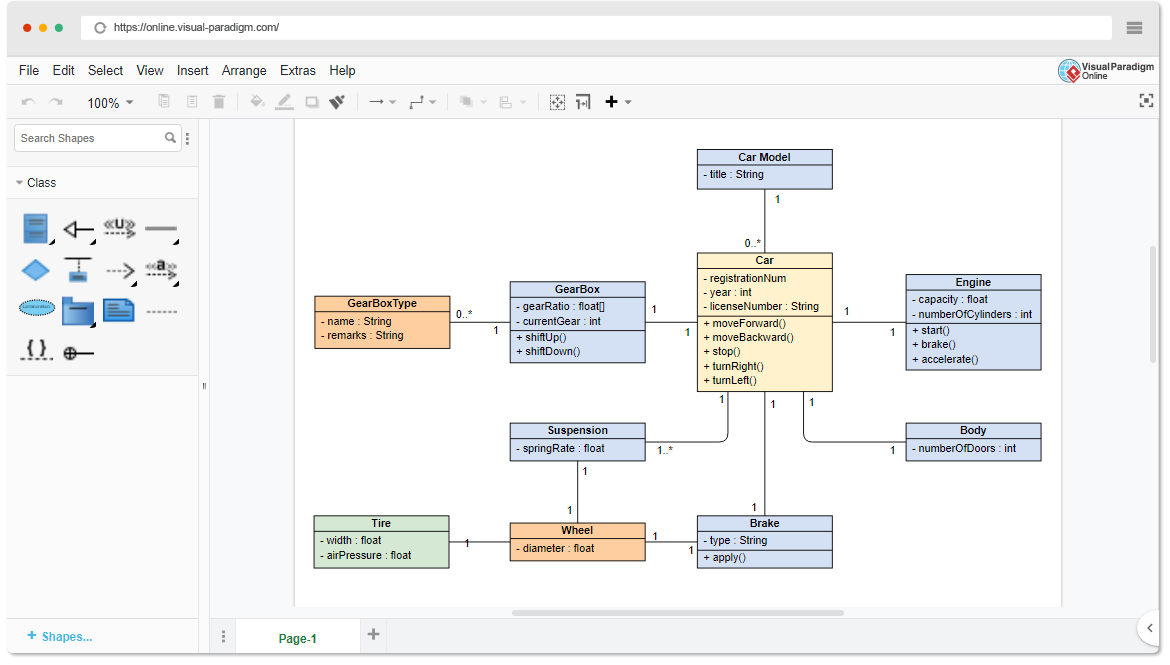
Multiplicity in class diagram should be indicated at each end of the association. This specifies the minimum and maximum number of instances that can be linked.
For example, a car has 3 or 4 wheels, but each wheel belongs to exactly one car. Place multiplicity notations near the ends of an association. These symbols indicate the number of instances of one class linked to one instance of the other class.
-
Posted on February 9, 2022
-
/Under IT
There are six main types of relationships between classes: inheritance , realization / implementation , composition , aggregation , association, and dependency .
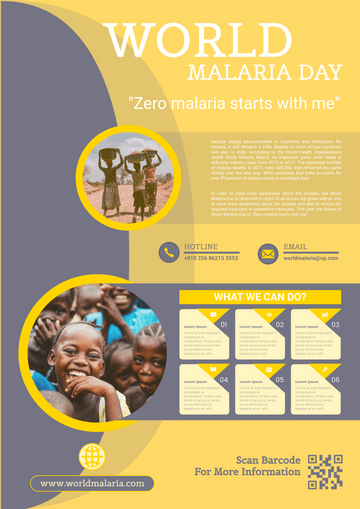
World Malaria Day Poster With Details: Create Customizable Posters Online with Visual Paradigm Visual Paradigm Online, the leading online poster maker, is proud to showcase our latest poster design: "World Malaria Day Poster With Details." This poster is specifically designed to raise awareness about World Malaria Day and provide important information about this deadly disease. The poster features a striking design that incorporates bold colors, engaging visuals, and concise text to convey its message. The theme of the poster revolves around raising awareness about malaria, its impact on people's lives, and the need…
continue reading →