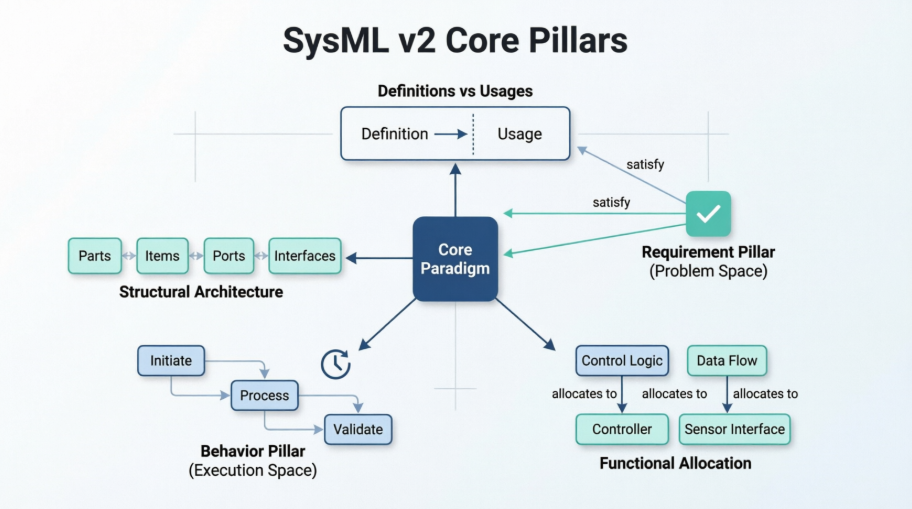
A SysML v2 Case Study on Model-Based Systems Engineering
Introduction Modern systems engineering faces an increasingly complex challenge: maintaining traceability and coherence between stakeholder needs and technical implementations while managing cross-cutting concerns across multiple architectural viewpoints. Traditional documentation approaches often create silos between requirements, behavior, and structure, leading to inconsistencies, gaps in coverage, and costly rework during system development. SysML v2 emerges as a transformative solution to these challenges, offering a rigorous, executable modeling language that bridges the gap between abstract problem spaces and concrete solution implementations. This case study demonstrates how SysML v2's modernized approach enables engineers to create seamlessly integrated…continue reading →