
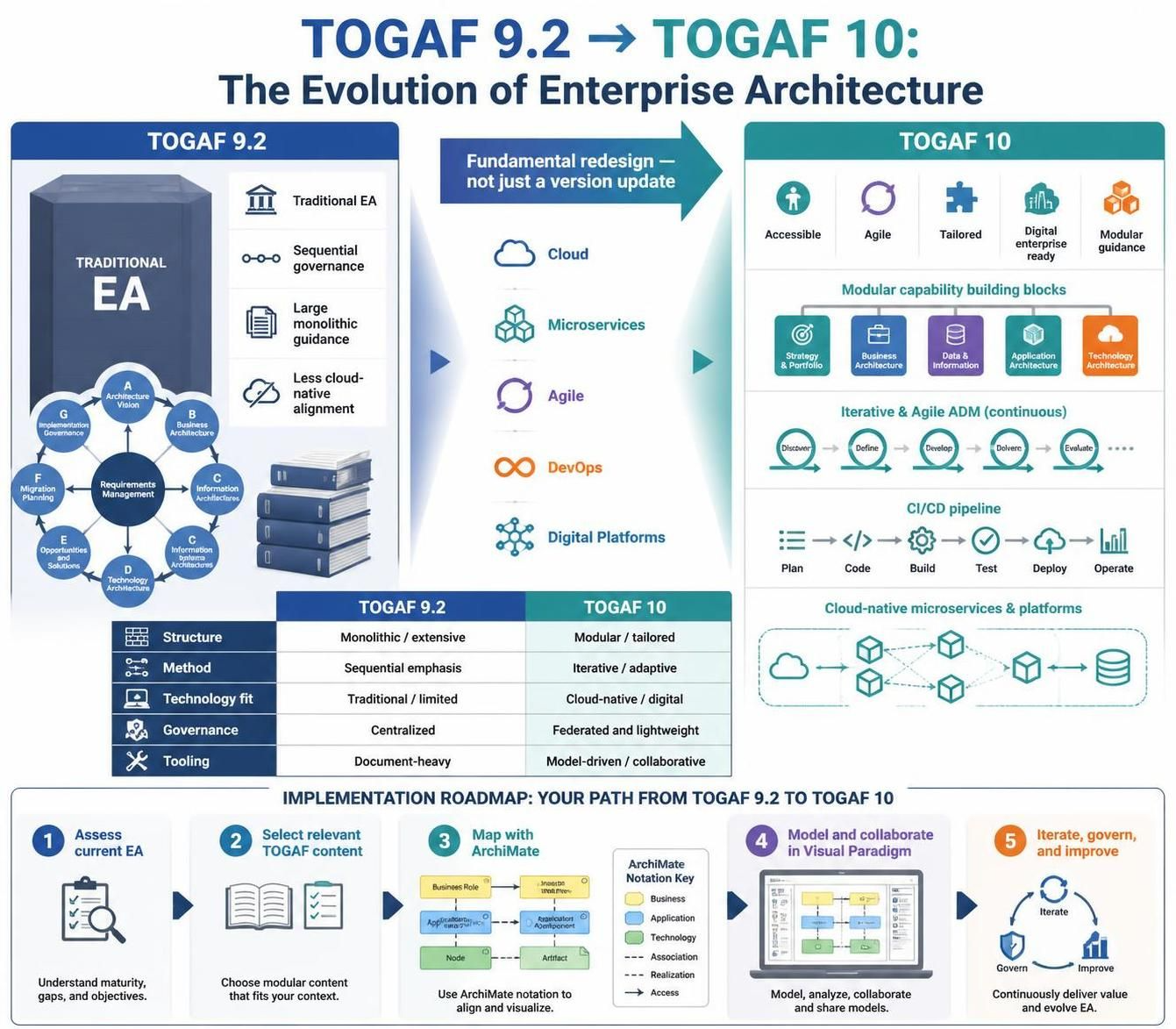
Navigating the Shift: A Practical Guide to Migrating from TOGAF 9.2 to TOGAF 10

Navigating the Shift: A Practical Guide to Migrating from TOGAF 9.2 to TOGAF 10

Introduction For over two decades, The Open Group Architecture Framework (TOGAF) has been the de facto standard for Enterprise Architecture (EA). However, the technology landscape has shifted dramatically since the release of TOGAF 9.2. The rise of cloud-native computing, microservices, Agile methodologies, and DevOps has rendered the traditional, monolithic approach to architecture somewhat rigid for modern digital enterprises. The transition to TOGAF 10 is not merely a version update; it is a fundamental redesign intended to make enterprise architecture more accessible, agile, and relevant. This guide explores the core differences between TOGAF 9.2…continue reading →
From Strategy to Execution: Accelerating Enterprise Architecture with AI-Powered ArchiMate Modeling

Introduction In today's rapidly evolving digital landscape, organizations face unprecedented complexity in aligning business strategy with technology execution. Enterprise Architecture (EA) has emerged as a critical discipline for navigating this complexity, providing the frameworks and tools needed to visualize, analyze, and communicate how different organizational domains interconnect. At the heart of modern EA practice lies ArchiMate—the open, vendor-independent modeling language standardized by The Open Group. This case study explores how ArchiMate, particularly when empowered by AI-driven tooling like Visual Paradigm, transforms enterprise architecture from a theoretical exercise into a dynamic, actionable practice. We…continue reading →
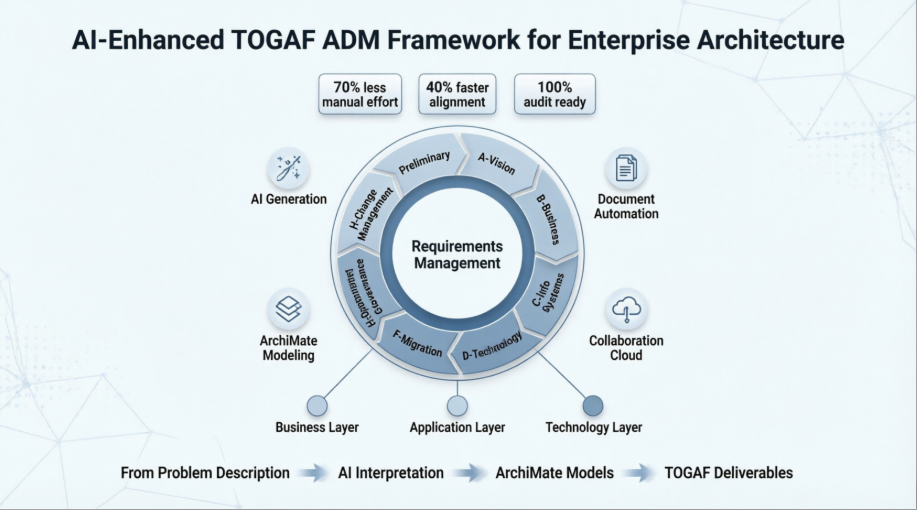
Transforming Enterprise Architecture: A Case Study on AI-Enhanced TOGAF ADM Implementation with Visual Paradigm

Transforming Enterprise Architecture: A Case Study on AI-Enhanced TOGAF ADM Implementation with Visual Paradigm

Introduction In today's rapidly evolving digital landscape, organizations face unprecedented pressure to align their technology investments with strategic business objectives. Enterprise Architecture (EA) has emerged as a critical discipline for bridging this gap, yet many organizations struggle with the complexity, documentation overhead, and collaborative challenges inherent in traditional EA frameworks. This case study explores how a global financial services organization successfully implemented The Open Group Architecture Framework (TOGAF®) Architecture Development Method (ADM) by leveraging AI-powered tooling through Visual Paradigm. By combining TOGAF's proven methodology with intelligent automation, the organization achieved significant improvements in…continue reading →