Architecting with Clarity: A Comprehensive Case Study on UML Building Blocks

Architecting with Clarity: A Comprehensive Case Study on UML Building Blocks

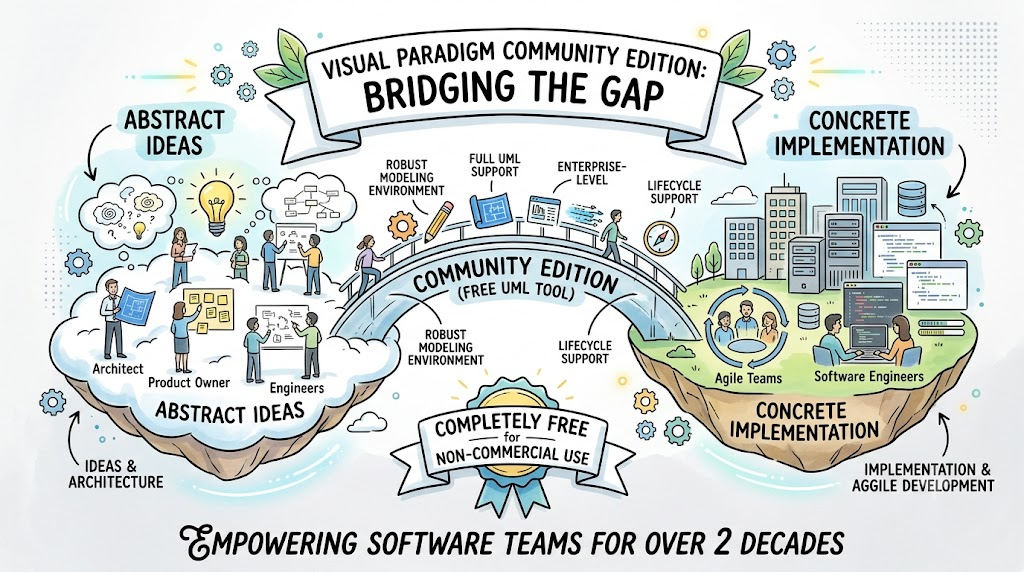
Introduction Modern software systems are inherently complex, composed of hundreds of interacting components, concurrent processes, and intricate data flows. Bridging the gap between abstract business requirements and concrete technical implementation requires a standardized, unambiguous medium of communication. The Unified Modeling Language (UML) serves as that universal blueprint, providing a visual vocabulary that developers, architects, and stakeholders can share across disciplines. While theoretical knowledge of UML syntax is valuable, true mastery emerges when these concepts are applied to a cohesive, real-world scenario. This case study demonstrates how the three foundational building blocks of UML—Things, Relationships,…continue reading →

Architecting Systems with UML: A Comprehensive Case Study in Modern Engineering

Introduction In contemporary software engineering, the gap between abstract business requirements and deployable, scalable code is often bridged by a single, standardized notation: the Unified Modeling Language (UML). As systems grow in complexity, distributed architecture, and cross-functional dependency, relying on informal sketches or isolated codebases introduces unacceptable risk. UML resolves this by providing a semantically rigorous, graphical language that transcends programming paradigms and development methodologies. This case study examines how a modern engineering team applied UML across the full development lifecycle of an enterprise-grade system, demonstrating how visualization, specification, construction, and documentation converge…continue reading →
Structuring System Behavior: A Practical Guide to UML Use Case Relationships

Structuring System Behavior: A Practical Guide to UML Use Case Relationships

Introduction In modern software engineering, use case diagrams are frequently misunderstood as mere feature inventories or high-level project roadmaps. In reality, they serve as architectural scaffolding. When applied correctly, use case relationships do not simply list what a system should do; they actively decompose complex behaviors into manageable, reusable, and logically coherent modules. This structural clarity bridges the gap between stakeholder expectations and development execution, ensuring that detailed design documentation remains maintainable, unambiguous, and aligned with actual runtime behavior. This case study explores how to leverage the three core UML 2.0 use case relationships—<<include>>,…continue reading →
Orchestrating Complexity: Sequential vs. Concurrent Substates in State Machine Modeling Introduction

Orchestrating Complexity: Sequential vs. Concurrent Substates in State Machine Modeling Introduction

Introduction As modern software systems grow in scale and functionality, flat state diagrams quickly become unwieldy. Real-world applications rarely operate in a simple linear fashion; instead, they manage interdependent workflows, background processes, and user-driven interactions that demand precise orchestration. To tackle this complexity, state machine modeling introduces composite states, which encapsulate internal behaviors within a single parent state. The architectural decision of how to structure these internal behaviors hinges on two fundamental paradigms: Sequential (Or) Substates and Concurrent (And) Substates. Choosing between these paradigms is not merely a diagramming preference; it directly influences system architecture, concurrency handling,…continue reading →
Modeling Dynamic Behavior: A Comprehensive Case Study in UML 2.0 State Machines

Modeling Dynamic Behavior: A Comprehensive Case Study in UML 2.0 State Machines

Introduction Modern software systems are rarely static. Objects, components, and services continuously evolve, reacting to user inputs, network messages, hardware signals, and internal timers. While structural modeling excels at defining what a system is made of, it falls short of capturing how those components behave over time. This is where behavioral modeling becomes indispensable. State Machine Diagrams provide a rigorous, standardized approach to mapping the dynamic lifecycle of an object. By explicitly defining conditions, events, and the rules that govern state changes, engineers can eliminate ambiguity, prevent runtime anomalies, and create highly maintainable architectures. This case study…continue reading →
Orchestrating Complex Control Flow: A Comprehensive Case Study on UML 2.0 Interaction Fragments

Orchestrating Complex Control Flow: A Comprehensive Case Study on UML 2.0 Interaction Fragments

Introduction Modern software architectures rarely follow simple, linear execution paths. Distributed systems, event-driven microservices, and concurrent data pipelines demand behavioral models that can accurately represent conditional branching, parallel execution, iterative processes, and exception handling. Traditional UML sequence diagrams, constrained by strictly vertical message flows, quickly become inadequate when modeling these dynamic behaviors. UML 2.0 addressed this limitation by introducing Interaction Fragments—a standardized mechanism for embedding control-flow logic directly into sequence and communication diagrams. This case study examines how development teams can leverage interaction fragments to bridge the gap between high-level architectural design and precise…continue reading →
Architecting Clarity: A Practical Case Study in UML 2.0 Package Design

Architecting Clarity: A Practical Case Study in UML 2.0 Package Design

Introduction As enterprise software systems evolve from monolithic codebases into distributed, multi-team ecosystems, the challenge of maintaining structural clarity becomes paramount. When hundreds of classes, interfaces, and use cases coexist without defined boundaries, cognitive load spikes, dependency conflicts multiply, and development velocity stalls. UML 2.0 package fundamentals provide the architectural scaffolding needed to tame this complexity. This case study explores how disciplined package design—rooted in namespace management, exclusive ownership, and logical partitioning—enables engineering teams to scale their systems without sacrificing maintainability. By walking through real-world modeling scenarios, visual notation standards, and proven architectural…continue reading →
Beyond Imports: A Practical Case Study on UML 2.0 Package Merge for Layered & Extensible Architectures

Beyond Imports: A Practical Case Study on UML 2.0 Package Merge for Layered & Extensible Architectures

📖Introduction In modern software architecture, the tension between core stability and contextual flexibility is constant. Organizations routinely struggle with how to extend foundational domain models for specific technological, regulatory, or client-specific requirements without violating separation of concerns, introducing duplication, or fracturing the Open/Closed Principle. Traditional UML mechanisms like «import» or «access» solve namespace visibility but fall short when structural fusion is required. They leave developers manually composing fragmented models, duplicating attributes, or tightly coupling infrastructure to business logic. Enter the UML 2.0 Package Merge («merge»). Often misunderstood or underutilized, this specification-grade relationship provides a deterministic, model-driven mechanism to incrementally extend, specialize, and layer…continue reading →

Structuring Complexity: A Real-World Implementation of UML Package Architecture

Introduction As software systems scale in scope and team size, architectural models inevitably grow unwieldy. Diagrams become cluttered, naming collisions multiply, and cross-module dependencies spiral into unmanageable tangles. Without a disciplined grouping mechanism, even the most experienced engineering teams struggle to maintain clear boundaries, enforce encapsulation, or onboard new contributors efficiently. UML 2.0 packages provide the foundational remedy to this challenge. Far more than simple visual folders, packages serve as logical containers that govern namespace management, visibility rules, and structural hierarchy. This case study examines how a mid-to-large-scale enterprise platform leveraged UML 2.0…continue reading →
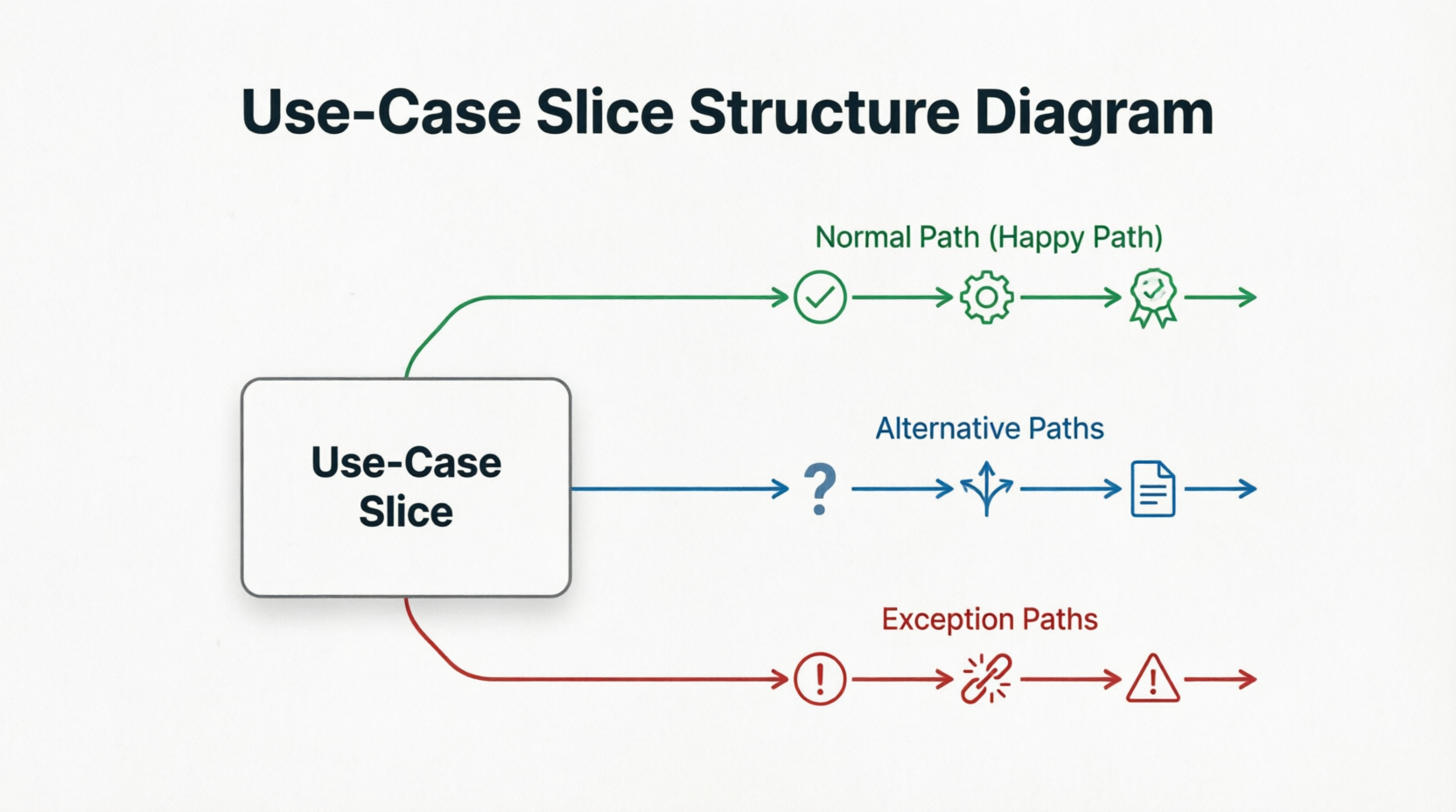
Blueprints for Behavior: A Comprehensive Case Study in UML 2.0 Use Case Modeling

Blueprints for Behavior: A Comprehensive Case Study in UML 2.0 Use Case Modeling

Introduction In modern software engineering, the gap between stakeholder vision and technical implementation is often where projects falter. Vague requirements, scope creep, and misaligned expectations can derail even the most well-funded initiatives. UML 2.0 use cases were designed to bridge this gap, serving as the primary vehicle for capturing, organizing, and specifying system behavioral and functional requirements. Yet, many teams treat use cases as mere diagrams or bureaucratic artifacts, missing their true power as living, actionable specifications. This case study follows the requirements engineering transformation of NexusBook, a mid-sized e-commerce platform scaling its checkout,…continue reading →