
Static Schemas, Dynamic Snapshots: A Practical Case Study in UML 2.0 Structural Modeling

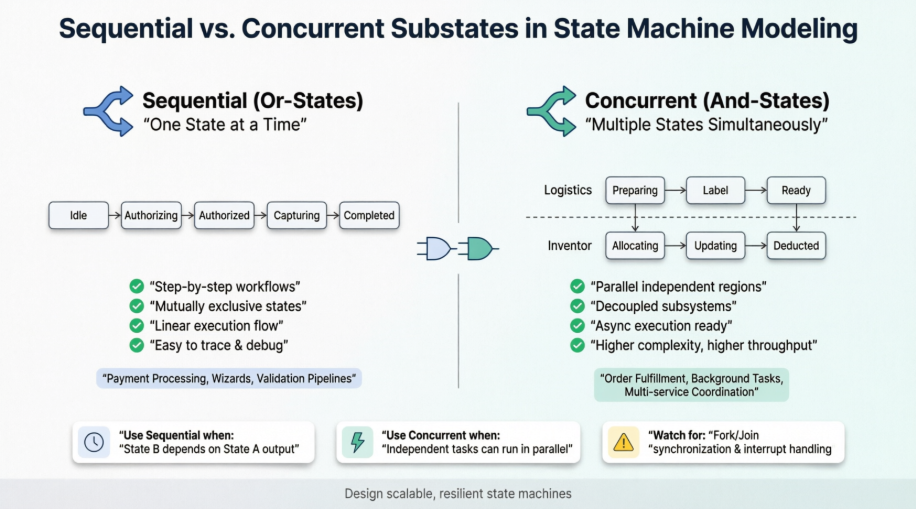
Introduction In modern software engineering, the gap between architectural design and runtime behavior remains one of the most common sources of system failure. Teams frequently invest heavily in static domain modeling, only to discover during integration testing or production debugging that their compile-time assumptions do not align with actual object states, multiplicity constraints, or instance relationships. This disconnect often stems from treating structural diagrams as purely documentation artifacts rather than executable validation tools. UML 2.0 addresses this gap by providing two complementary lenses for structural modeling: Class Diagrams (the compile-time metadata schema) and Object Diagrams (the runtime…continue reading →
Beyond Isolated Classes: Architecting System Structure Through UML Relationships & PlantUML

Beyond Isolated Classes: Architecting System Structure Through UML Relationships & PlantUML

Introduction In object-oriented architecture, classes define the vocabulary of a system, but they remain structurally silent until connected. The true architectural integrity of any software model emerges not from isolated entities, but from the relationships that bind them. Drawing from Kendall Scott's Fast Track UML 2.0, this guide distills the foundational mechanics of class relationships and translates them into executable PlantUML workflows. While beginners often focus heavily on class attributes and operations, experienced modelers know that relationships dictate lifecycle coupling, navigability constraints, inheritance taxonomies, and dependency boundaries. Through a cohesive case study of a…continue reading →

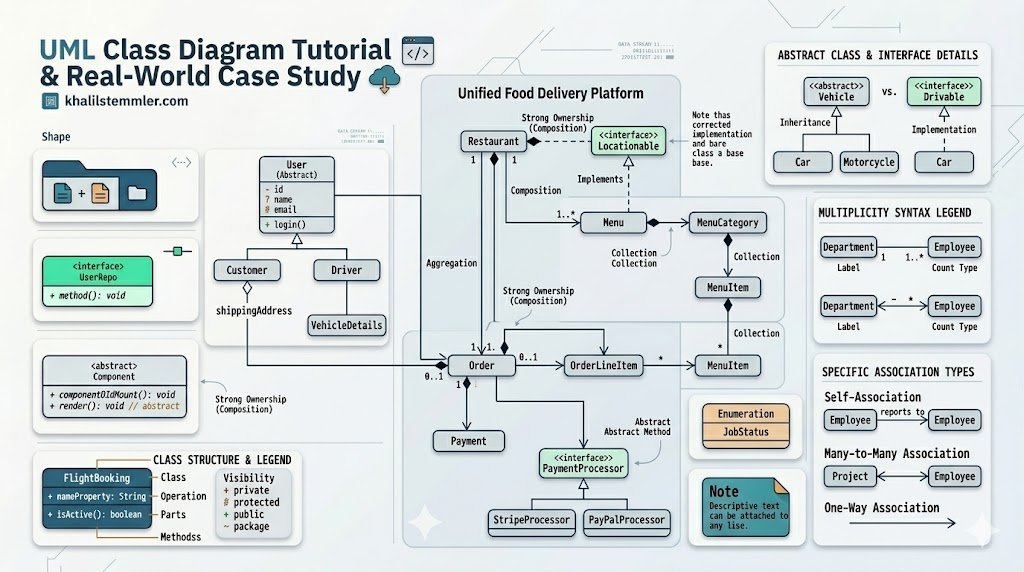
Mastering UML Class Diagrams: A Practical Case Study in System Design with PlantUML

Introduction In today's complex software development landscape, clear communication and precise system modeling are paramount to project success. Among the most powerful tools in a software architect's toolkit is the UML Class Diagram—a visual language that bridges the gap between abstract requirements and concrete implementation. This case study explores how class diagrams serve as the backbone of object-oriented design, enabling teams to model static system structure, define relationships between entities, and establish clear contracts for development. Through a practical e-commerce order management system example, we'll demonstrate how to progressively refine class diagrams across three…continue reading →
Precision Through Partnership: A Case Study on the AI-Assisted UML Class Diagram Generator

Precision Through Partnership: A Case Study on the AI-Assisted UML Class Diagram Generator

📘 Introduction In modern software engineering, UML class diagrams serve as the foundational blueprint for system architecture, yet their creation remains a bottleneck. Traditional modeling tools often require manual, error-prone syntax entry, lack contextual alignment with business requirements, and offer little built-in validation. As systems grow in complexity, architects need a way to translate high-level concepts into structurally sound, production-ready diagrams without sacrificing design rigor. The AI-Assisted UML Class Diagram Generator addresses this gap by introducing a structured, 10-step wizard that merges natural language processing with strict object-oriented design principles. Rather than replacing human architects,…continue reading →

How Visual Paradigm’s AI Chatbot Revolutionizes Diagram Creation

Introduction In an era where digital transformation accelerates business innovation, the ability to quickly visualize complex ideas has become a critical competitive advantage. Teams across software development, business analysis, and enterprise architecture constantly face the challenge of translating abstract concepts into clear, actionable diagrams. Traditional diagramming tools, while powerful, often require significant time investment in manual layout, syntax compliance, and iterative refinement. Visual Paradigm's AI Chatbot represents a paradigm shift in visual modeling. By combining conversational AI with deep domain expertise in industry-standard modeling languages, this intelligent assistant empowers users to transform natural…continue reading →

A Case Study on Accelerating UML Class Diagram Development with Visual Paradigm’s AI Ecosystem

Introduction In today's fast-paced software development landscape, the ability to rapidly translate abstract system requirements into clear, actionable architectural models is a critical competitive advantage. Traditional UML class diagram creation—often a manual, time-intensive process of sketching classes, defining attributes, mapping relationships, and ensuring standards compliance—can become a bottleneck in agile workflows. This case study explores how Visual Paradigm's integrated AI-powered ecosystem transforms this challenge into an opportunity for acceleration, collaboration, and precision. We examine a real-world scenario: a mid-sized fintech startup, "PayFlow Solutions," tasked with designing the core domain model for a new…continue reading →

Generate UML Sequence Diagrams Instantly with AI!

Generate UML Sequence Diagrams Instantly with AI! Discover the power of instant diagram generation using the Visual Paradigm AI chatbot. https://youtu.be/IO7atI4ghss?list=PLLiBQRHikaGZl6rzelsDyw7dsM5fWPAAY Our recent product demo showed just how easy it is to create complex models quickly. We used the chatbot to generate a UML sequence diagram illustrating the normal scenario for washing clothes by a washing machine. The key benefit is iterative refinement: initial generation looks good, but you can request more details. During the demonstration, we asked the chatbot to add the water supply and then specifically requested it to add the…continue reading →
Top 5 UML Tools: Why Visual Paradigm Stands Out

Top 5 UML Tools: Why Visual Paradigm Stands Out

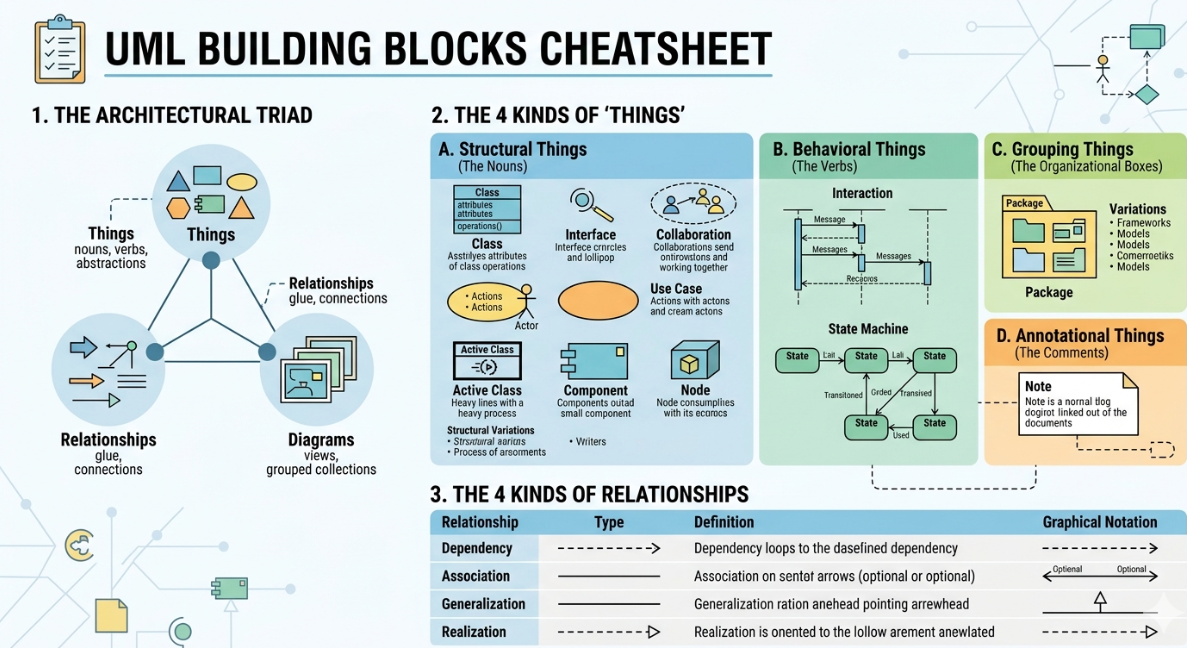
Unified Modeling Language (UML) is a powerful tool for visualizing, specifying, constructing, and documenting the artifacts of software systems. To effectively utilize UML, having the right tools at your disposal is essential. Here, we’ll explore the top five UML tools available today, with a particular focus on why Visual Paradigm is the best choice for professionals and teams alike. 1. Visual Paradigm Visual Paradigm is widely regarded as the leading UML tool in the market. Its robust features cater to a variety of modeling needs, from software development to business process modeling. Here…continue reading →
Use Case Diagram Tutorial

Use Case Diagram Tutorial

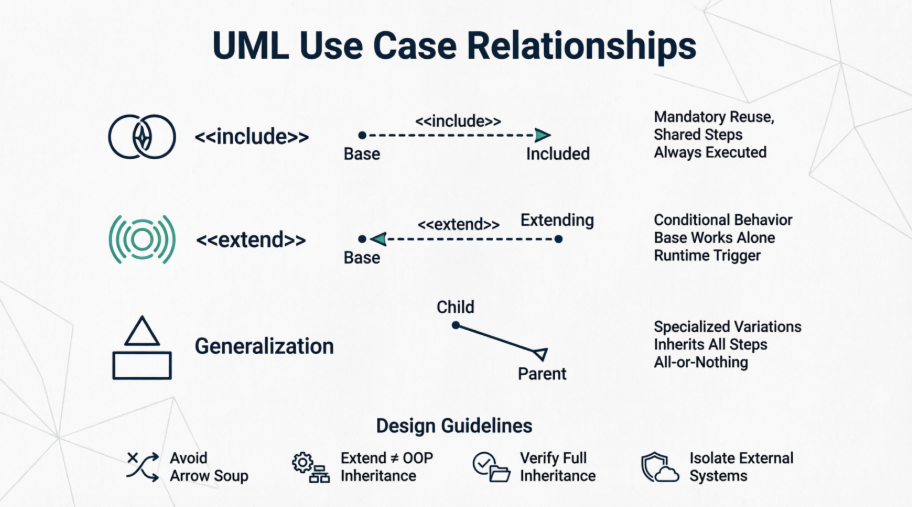
Introduction A use case diagram is a graphical representation of the interactions between users (actors) and a system. It helps to identify the system's functional requirements by illustrating the different ways users can interact with the system to achieve specific goals. This tutorial will guide you through the basics of creating and understanding use case diagrams, using the Wheels bike hire system examples on object-oriented development. What is a Use Case Diagram? A use case diagram is a type of behavioral diagram defined by the Unified Modeling Language (UML). It consists of use…continue reading →
Step-by-Step Class Diagram Tutorial Using Visual Paradigm

Step-by-Step Class Diagram Tutorial Using Visual Paradigm

What is a Class Diagram? A class diagram is a static structure diagram in UML (Unified Modeling Language) that shows the system's classes, their attributes, methods (operations), and the relationships between objects. It is used to model the static view of an application. Why Use a Class Diagram? Visual Representation: Provides a clear visual representation of the system's structure. Communication: Helps in communicating the design of the system to stakeholders. Blueprint: Acts as a blueprint for the system's implementation. Documentation: Serves as documentation for the system's design. When to Use a Class Diagram? Design Phase: During the design…continue reading →